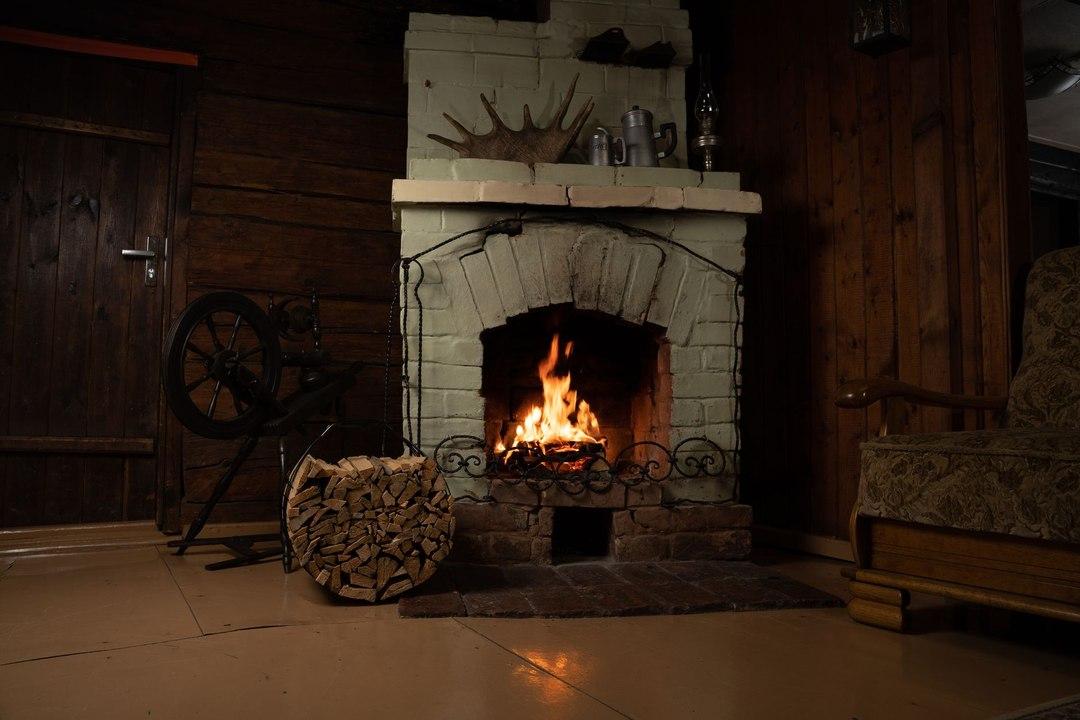
The fireplace is in the listing photos for a reason
A weekend house sells on the fireplace. The listing shows it lit, with a rug and a stack of wood beside it. What the listing does not show is how long it has been since anyone lit it for real, or what moved into the flue while the house sat waiting for a buyer. For a house near Azusa or up toward the foothills, that can be a full season or more. Before you buy, the chimney deserves its own inspection, done by a chimney company, inside your contingency.
What the rules point to
When a house changes hands, by sale or by transfer, NFPA 211 points to the Level 2 as the inspection to book. Your general home inspector will look at the firebox and the outside of the chimney, and often writes a line recommending further evaluation by a chimney specialist. That line is the Level 2.
A Level 2 from Tolliver Chimney Works costs $385. It covers the firebox, smoke chamber, damper and cap, and runs a camera through the full length of the flue. Where the attic and roof can be reached, we check the chimney where it passes through them. You get a written report with photos, sent to you and to anyone you name, such as your agent.
Local rules also apply to burning. South Coast AQMD Rule 445 covers wood burning across this part of Los Angeles County, including no-burn days in the cooler months. If you plan to burn wood often, factor that in when you weigh a wood fireplace against gas.
What the camera finds in a house that sat empty
Houses that were used a few weekends a year, or stood empty while for sale, tend to show the same findings:
- Nest debris. Twigs and droppings on the smoke shelf or lodged in the flue, often where no cap was fitted.
- Rust on the damper. A plate that has not moved in a year, rusted shut or rusted thin from rain coming down.
- Water at the crown. Cracks in the concrete top of the chimney, with stains on the brick below.
- Open flue tile joints or cracks. Common in older clay-lined chimneys, and in chimneys that rode out a quake. Shaking cracks tiles where nobody can see them from below.
- Missing or loose flashing. Water marks on the ceiling or attic framing next to the chimney.
None of these is unusual. What matters for a buyer is knowing which ones are present before the contingency ends, so they can go on a repair request or become a credit.
What the fixes cost
Some of the usual fixes have a published price from us. Others depend on what the camera found, and we quote them in writing once the report is done.
| Finding | What it costs |
|---|---|
| No cap, or a rusted one | quoted after we measure |
| Water getting in at the chimney | $550 to $3,300 |
| Wide chimney catching water on the uphill side | $440 to $995 |
| That same water diverter plus new flashing all round | $660 to $1,650 |
| Cracked flue tiles, crown repair, damper, liner | quoted in writing |
These figures let a buyer and agent turn a finding into a number while escrow is open. Liner and crown work vary too much from one chimney to the next to price without seeing them.
If you are already in escrow, send us the address, your agent's name and the date your contingency ends, and we will set the Level 2 and tell you who receives the report.
Buying from far away
Many second-home buyers do not live near the house. That is fine for a chimney inspection. Access goes through the listing agent or your own agent, the same way your home inspector got in. We send the report and photos to you and your agent, so you can read the findings from wherever you are and talk them over before you decide. The home sale inspection page walks through a sample report, and the page for agents shows what your agent receives.
Gas logs and inserts in the house you are buying
Many weekend houses were switched to gas at some point. A gas log set or insert does not excuse the chimney from inspection. Gas logs in a masonry fireplace still vent up the old flue, and an insert usually vents through a liner run inside it. On a Level 2 we check that the venting suits the unit, that the damper is fixed open where gas logs need it, and that the liner, if there is one, is connected at the top and bottom. If the seller's unit is old and you want to replace it after closing, a gas insert from us runs $2,750 to $5,500, and the venting work it needs is set out in a written quote. Knowing that number during escrow helps when you decide whether to ask for a credit.
Questions to ask before you book anyone
- Is this a Level 2 with a camera through the whole flue, or a look from the firebox?
- Will the report have photos of each finding, and who gets a copy?
- Will each finding say plainly whether it needs repair now or is only a note?
- Which fixes do you price on the report, and which come as a written quote?
Before escrow closes
The chimney is one of the few parts of a weekend house you cannot judge from a showing. To get the Level 2 in while you can still act on it, reach Tolliver Chimney Works from the phone button on this page, and tell us the address and how access is arranged. If the house has a gas unit too, see what a gas fireplace service covers.
Own a House That Sits Closed?
Tolliver checks the cap, crown, flue, damper and gas pilot before your first fire, and photographs each one for you. Visits run from Azusa to West Covina, Arcadia, Monrovia and the towns around them.